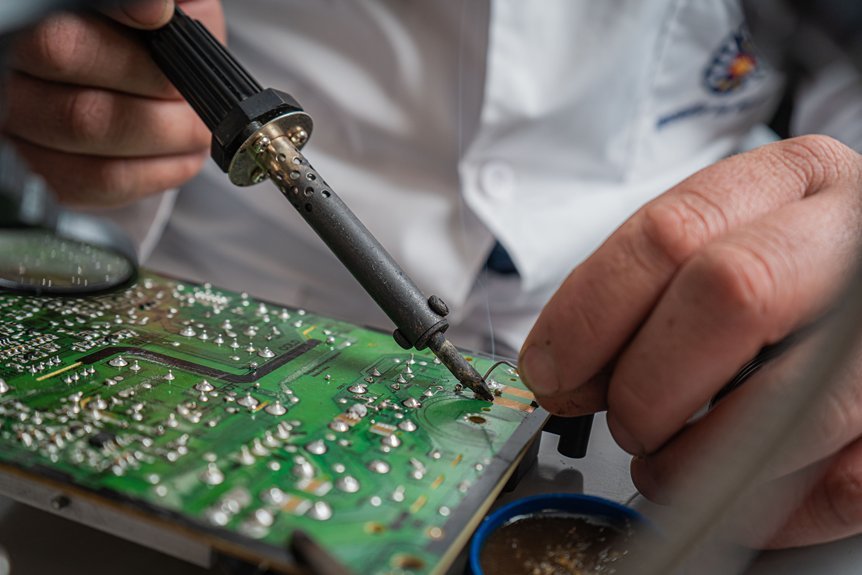

Troubleshooting 101 begins with a clear statement of the 6623596803 issue, separating symptoms from root cause. It favors observable effects, environment, and timestamps to isolate the core problem. Quick-win actions include minimal configuration tweaks, cache tuning, and workflow simplifications, with impact measured before moving forward. Diagnostics combine logs, metrics, and reproducible tests to verify findings, while maintaining impartial interpretation. Preventive habits and standard procedures then frame the path, leaving the next steps just out of reach for now.
Troubleshooting 101: Identify the Core 6623596803 Issue
Troubleshooting begins by clearly defining the core issue behind the 6623596803 symptom. The analysis separates symptom from cause, detailing observable effects, environment, and timestamps. A precise problem statement emerges, guiding objective verification. The core issue is isolated through targeted tests, preventing speculation. Documented findings enable quick fixes, while remaining adaptable to evolving data. Clarity, discipline, and methodical steps support freedom in resolution.
Quick-Win Fixes to Restore Performance Fast
Quick-win fixes to restore performance fast focus on high-impact, low-effort actions that yield immediate improvement.
The analysis proceeds in structured steps: identify bottlenecks, implement minimal viable changes, measure impact, and iterate.
Quick win fixes prioritize simple configuration adjustments, cache tuning, and workflow streamlining.
This approach preserves autonomy while delivering tangible results, with a clear objective: restore performance efficiently.
Diagnostic Methods: Logs, Metrics, and Reproducible Tests
Diagnostic methods combine objective data collection with replicable testing to establish a verifiable understanding of system behavior. Logs, metrics, and reproducible tests form a triad that clarifies root causes. Logs analysis reveals sequence and timing, while metrics visualization highlights trends and thresholds. Detachment ensures impartial interpretation, supporting disciplined troubleshooting and reproducibility without speculation or extraneous conjecture.
Preventive Habits and Best Practices for Future Reliability
Preventive habits and best practices for future reliability emphasize disciplined anticipation over reactive fixes. In practice, teams implement structured preventive maintenance schedules and regular system audits to identify weak points before failure occurs.
Reliability engineering informs risk prioritization, failure mode analysis, and performance benchmarks, guiding proactive improvements. Documentation, standardization, and periodic reviews sustain clarity, accountability, and long-term resilience across processes and components.
Frequently Asked Questions
What Are Hidden Root Causes Not Covered by Core Issue Diagnosis?
Hidden causes lie beyond surface analysis, revealing diagnostic gaps due to unseen interactions and data blind spots. The approach requires systematic verification, cross-checking evidence, and iterative hypothesis testing to prevent premature conclusions and ensure enduring resolution of core problems.
How to Recover Data After a Failed Diagnostic Run?
How can recovery be achieved after a failed diagnostic run? Recovery techniques prioritize data restoration through validated backups, filesystem checks, and integrity verification, systematically guiding preservation-oriented audiences toward safe data restoration while minimizing risk and downtime.
Which Environment Changes Most Often Trigger Recurring Faults?
Recurring faults most often stem from environment drift and incomplete test environment parity. The environment shifts unnoticed, causing misalignments; maintaining parity minimizes regressions, while addressing drift promptly preserves stability, enabling freedom to innovate without repeated fault cycles.
What Training Helps Teams Recognize Non-Obvious Symptom Patterns?
A hypothetical case shows a technician spotting subtle cues; diagnostic training enables teams to recognize non obvious patterns, accelerating resolution. The approach emphasizes pattern recognition, structured testing, and peer review, empowering practitioners seeking freedom through disciplined inference.
How to Verify Fixes Without Impacting Live Users?
They validate fixes by conducting a dry run, performing an impact assessment, and minimizing risk before deployment; this methodical approach confirms problem resolution while preserving user freedom and ensuring no live-user disruption occurs.
Conclusion
In sum, the methodology isolates symptoms from root causes, applying minimal, verifiable changes first and measuring impact before deeper action. By combining logs, metrics, and reproducible tests, teams validate findings with disciplined, impartial analysis. Preventive maintenance and clear role definitions sustain resilience and shorten future recovery times. The reader is reminded: objectivity guides every step, and consistency in procedures ensures reliable, repeatable outcomes—like a well-tuned machine whose steady cadence invites confidence and minimizes downtime. Meticulousness matters.